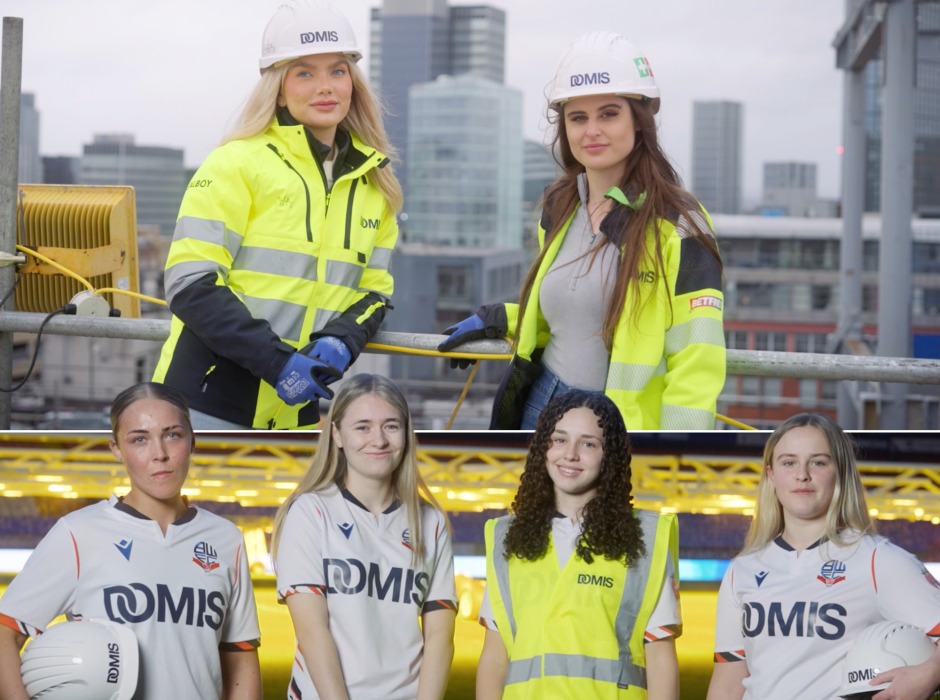
Women in construction and women’s football are two stories moving in the same direction: increasing visibility, rising participation, and growing belief that these spaces are not “for a few”, but for everyone.
The momentum is real. Yet the statistics also make one thing clear: progress is happening, but it is not complete.
Women in construction is growing, but the foundation still needs strengthening. Women make up 15% of the UK construction workforce, and on construction sites the figure is far smaller, commonly cited at around 1% of the manual workforce. In women’s football, firm foundations are being built earlier, with 2.6 million girls now having equal access to football in PE lessons, a 31% increase since 2020/21. Growth is undeniable in both, but the pipeline must keep expanding if foundations are to become the norm rather than the exception.
High rise construction is a pressure game and women in construction are increasingly visible in the STEM heavy roles that grow our towers higher each year: project management, design coordination, engineering, digital design, planning, and commercial. That growth is being fed by a widening STEM pipeline. Women now make up 27.6% of the UK’s core STEM workforce (over 1.4 million women), an all time high, but they remain significantly underrepresented in the disciplines high rise relies on most. In engineering and technology, women make up just 16.9% of the workforce.
The story of women in construction is not about waiting for the industry to evolve, it’s about pushing it forward deliberately. The figures show both the movement and the challenge: in Q4 2025, there were an estimated 311,750 women working in UK construction, but the gender split remains heavily weighted. In football, targeted action has accelerated access, with the FA confirming the 90% schools equal-access target was achieved three years ahead of schedule. The message is clear: change happens fastest where organisations commit to it.
Leadership is the point where momentum becomes permanence and women in construction are moving from being present in projects to shaping how they are led. The numbers show both progress and headroom. Research cited in the industry puts women at 16% of senior management roles in UK construction, while another widely referenced benchmark suggests women hold only 7% of line executive roles across the sector. That gap matters because high performance on complex builds depends on who is empowered to make decisions.
The trajectory for women in construction is upward and the parallels with women’s football make the lesson simple: momentum becomes mainstream when it is backed consistently. The stats prove progress, but they also underline that headroom is still to be made.
That’s why Domis is proud to sponsor Bolton Wanderers Women, and prouder still to spotlight women in construction across our business leading projects, setting standards, and proving every day that the future is built by those who show up and deliver.

